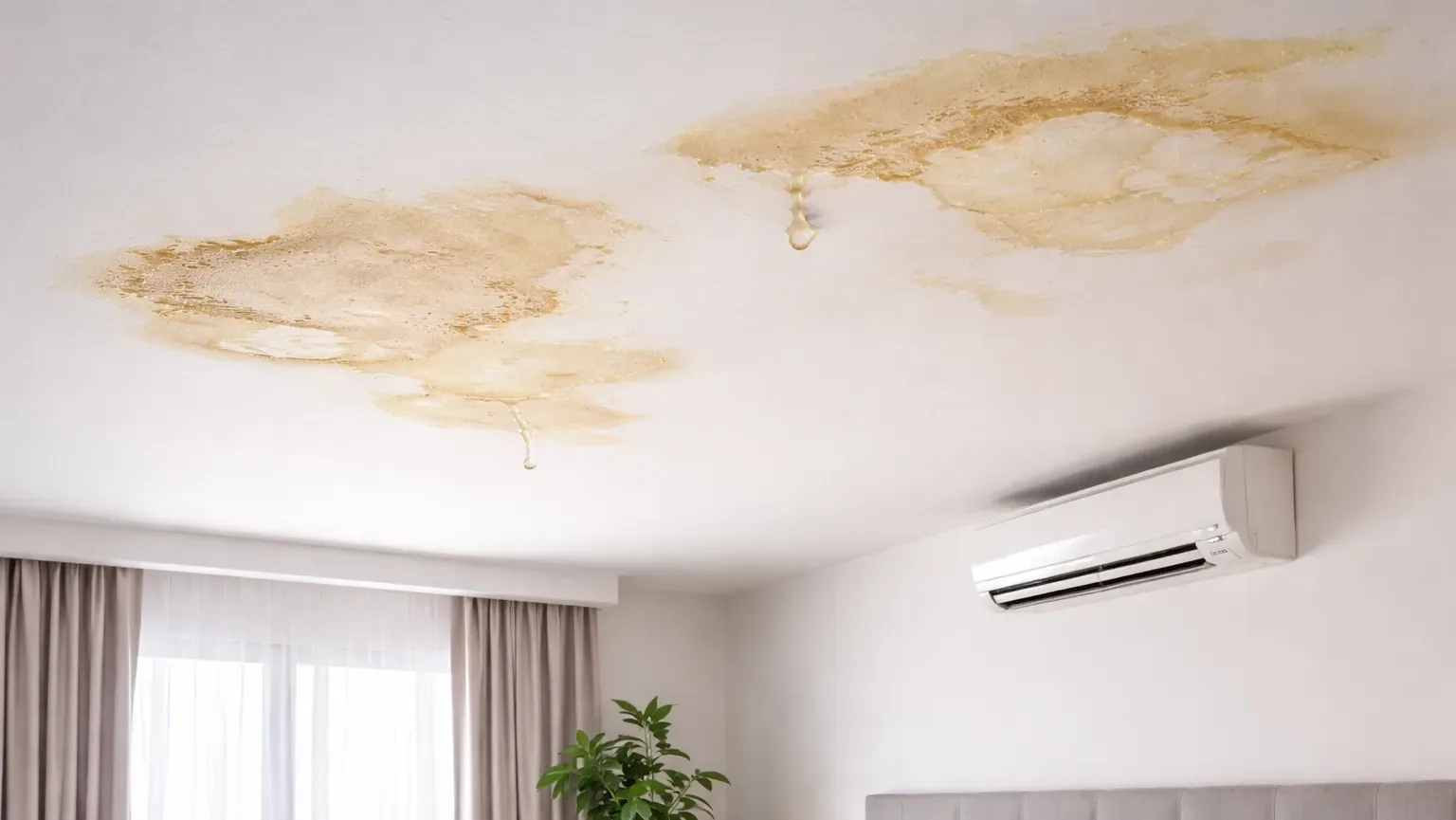
Ceiling stains without rain are a common issue for many homeowners in Singapore, especially during dry weather. Although they may seem like a minor problem, they often point to hidden moisture issues such as plumbing leaks, air conditioning condensation, waterproofing failure, or trapped moisture from earlier roof leakage.
This article explains the possible causes, signs to watch for, and when to take action before the damage gets worse.
Why Ceiling Stains Appear During Dry Weather in Singapore
Humidity, Condensation, and Poor Ventilation
Singapore’s tropical climate makes ceiling stains without rain more common than many homeowners expect. Warm, humid air naturally rises and, when it comes into contact with colder surfaces, it turns into condensation. This often happens around air conditioning ducts, where the cooler surface causes moisture to form. Over time, that moisture can drip onto the ceiling materials below and leave behind visible stains.
Indoor humidity also plays a big part. In general, humidity levels should stay within a comfortable range, but spaces with poor ventilation tend to trap warm, moisture-heavy air. This is especially common in bathrooms, kitchens, and laundry areas, where daily activities like showering, cooking, and drying clothes release a lot of water vapour into the air. When that moisture has nowhere to escape, it gathers near the ceiling and can condense on cooler surfaces. In Singapore, where humidity is already high to begin with, poor airflow can make the problem much worse and lead to ceiling stains even when there has been no rain at all.
Hidden Moisture in Building Materials
Previous roof leakage often leaves behind trapped moisture that creates ceiling stains cause issues long after the leak stops. Water passing through roofing materials picks up dissolved minerals, tannins, and other compounds. When the water evaporates, these substances remain, producing characteristic yellowish-brown ceiling stains water damage marks.
Gypsum, paper, and paint permanently change colour when saturated. Even after complete drying, materials may never return to their original appearance, leaving visible evidence of formerly wet conditions.
Uncommon Causes of Ceiling Stains Without Rain
Air Conditioning and Plumbing Issues
Air conditioning systems produce ceiling stains without rain through multiple failure points. Clogged drain pipes cause water to back up and overflow from the unit, soaking ceiling materials below. Poor insulation on AC pipes allows condensation to form on exposed surfaces, which then drips onto ceilings. Blocked drainage trays and malfunctioning condensate pans create similar overflow conditions.
Concealed pipes above ceilings crack, loosen, or corrode over time, allowing water to seep slowly through ceiling materials. Clear water staining typically indicates plumbing issues rather than external sources.
Waterproofing Failure and Structural Cracks
Waterproofing membranes deteriorate from age, foot traffic, and weather exposure. Failed seals at roof penetrations and cracked flashing around HVAC units permit water entry. Hairline cracks in ageing ceilings create pathways for water passage, accumulating in ceiling cavities before visible staining appears. Dirty ceiling stains water damage patterns suggest waterproofing system breakdown rather than plumbing failure.
Trapped Moisture from Previous Roof Leakage
Ceiling stains can also show up long after an earlier roof leak seemed to be resolved. In some cases, moisture from a past leak becomes trapped beneath insulation or waterproofing layers and stays hidden for months, or even years. Over time, that trapped moisture can soak into surrounding materials, weaken insulation performance, and create the right conditions for mould growth. When the damage is widespread and a large portion of the insulation has already been saturated, more extensive repair work or even full replacement may be more practical than patching isolated areas.
How to Identify and Address Non-Rain Ceiling Stains
Signs to Look For Before the Damage Spreads
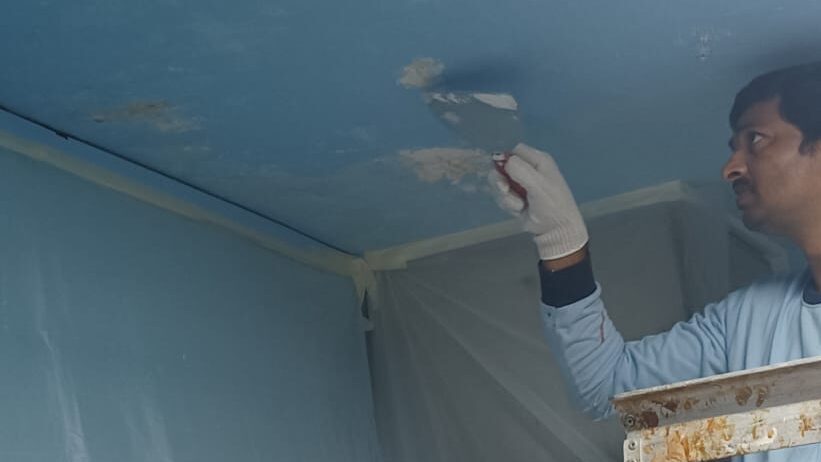
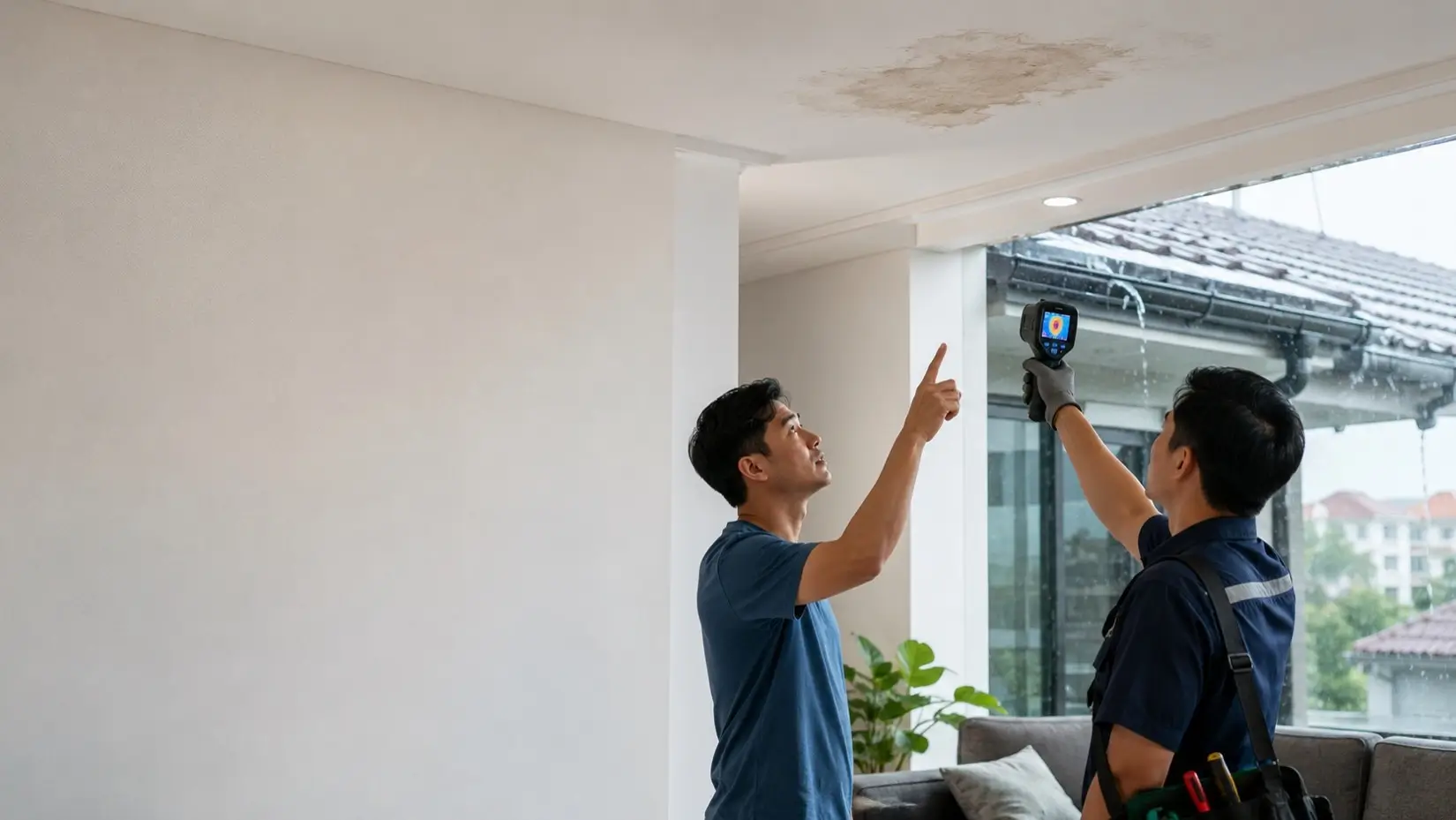
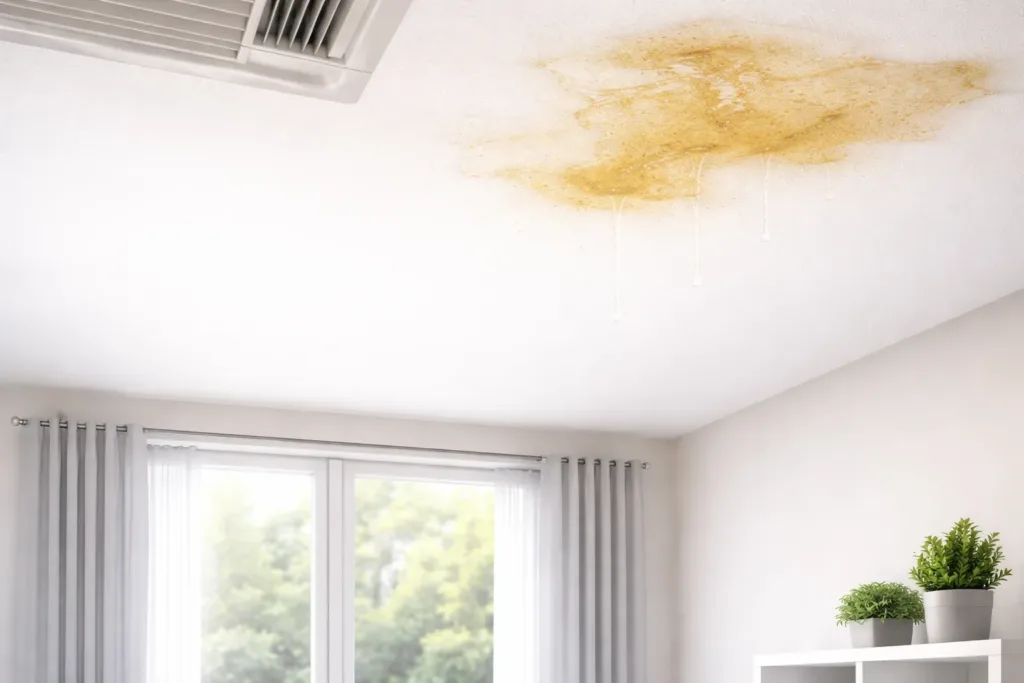
Spotting ceiling stains without rain early can help prevent more costly repairs later. Common warning signs include yellow or brown patches that gradually grow larger, peeling or bubbling paint, damp or cool spots, and a musty smell that may point to hidden mould.
The stain’s location can also offer clues. Marks near exhaust fans may suggest condensation, while stains at wall corners can indicate trapped moisture or poor insulation. If stains appear in multiple areas, the issue may be broader moisture build-up rather than a single leak.
Soft, spongy, or sagging areas should be taken seriously, as they may mean the ceiling material has been weakened. If the stain continues to spread or starts dripping, it is best to address it quickly before the damage gets worse.
When to Call Secure Waterproofing for Ceiling Leak Repair
If you notice persistent dampness, repeated paint peeling, or visible mould growth, it is best to contact Secure Waterproofing for ceiling leak repair early. These signs often point to a deeper issue rather than a simple surface stain. A professional assessment can help determine whether the problem is caused by roof leakage, plumbing defects, or failed waterproofing. If the stains continue to worsen even during dry weather, it is usually a sign that moisture is coming from a hidden non-rain source. Early attention helps prevent further damage to the ceiling, insulation, electrical points, and surrounding structure.
Conclusion
Ceiling stains without rain may seem minor, but they often point to hidden issues such as condensation, plumbing leaks, or waterproofing failure. Addressing the cause early can help prevent more serious and costly damage. If the stains keep returning, contact Secure Waterproofing for a professional inspection and the right repair solution.
FAQs
What causes ceiling stains when it hasn’t been raining?
Ceiling stains during dry weather typically result from condensation, air conditioning leaks, hidden plumbing issues, or trapped moisture from previous water damage. High humidity levels can cause warm air to condense on cold surfaces like AC ducts, creating water droplets that stain ceilings. Blocked AC drain pipes and concealed pipe leaks are also common culprits that allow water to seep through ceiling materials even without rainfall.
How can I tell if a ceiling stain is from an active leak or an old one?
Active leaks typically feel damp or cold to the touch and may have a musty odour, whilst old stains are dry and discoloured. You can use a moisture metre to determine if the area still contains water. If the stain appears yellowish-brown with ring patterns and the surface feels soft or spongy, moisture is likely still present. Old water stains that have bled through new paint will be dry but visible due to minerals and tannins left behind after the water evaporated.
Could brown spots on my ceiling be something other than water damage?
Yes, brown spots can indicate mould growth or smoke stains rather than water leaks. Mould thrives in poorly ventilated areas with high moisture levels, such as bathrooms and kitchens. If the spots don’t feel wet and there’s no obvious water source, they may result from condensation buildup, oil or grease stains, or even scuff marks from furniture during moving.
When should I contact a professional about ceiling stains?
You should call a waterproofing specialist like Secure Waterproofing if stains persist, worsen during dry periods, or are accompanied by peeling paint, visible mould, or musty odours. Professional assessment is essential when dampness continues despite no recent rainfall, as this confirms hidden sources like plumbing failures or waterproofing membrane deterioration. Early intervention prevents damage to insulation, framing, and electrical systems.
Can air conditioning systems cause ceiling stains?
Yes, air conditioning systems frequently cause ceiling stains through clogged drainpipes, overflowing condensate pans, or poorly insulated AC pipes. When drain lines become blocked, water backs up and overflows from the unit onto ceiling materials below. Condensation forming on exposed, un-insulated AC pipes can also drip onto ceilings, creating visible water stains even during completely dry weather.