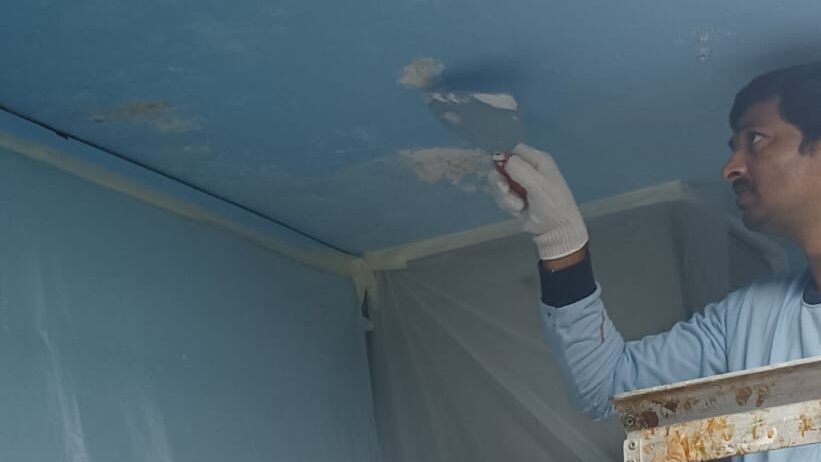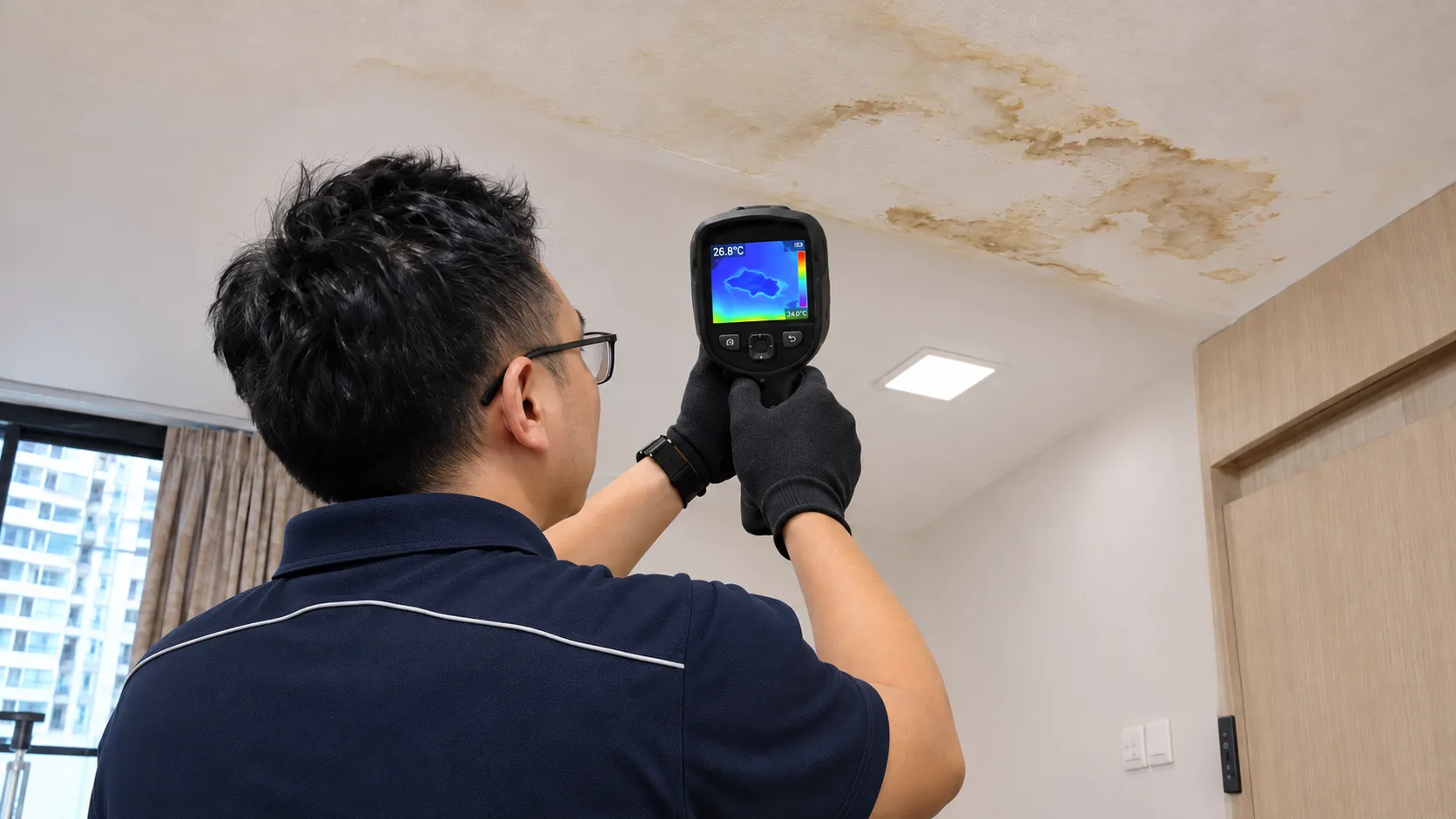
A brown patch on the ceiling or a strip of bubbling paint above the skirting could be a sign of hidden water leakage, but finding the actual source is not always straightforward. This is where thermal imaging leak detection can help. In HDB flats, condominiums and landed homes across Singapore, water can travel along floor slabs, through screed or around concealed pipes before surfacing, meaning the visible damage may be some distance from the source.
Using an infrared camera, specialists scan walls, ceilings and floors for unusual temperature patterns that may indicate hidden moisture. They then use moisture meters and other checks to investigate the suspected leak before recommending suitable repairs. This guide explains how the technology works, when it is useful and where its limitations lie.
What Is Thermal Imaging Leak Detection?
It is a non-destructive method that uses an infrared camera to map surface temperatures and highlight areas that behave differently from their surroundings, such as wet building materials.
How Infrared Thermography Reads Surface Temperature
Every surface gives off infrared radiation, which increases as its temperature rises. Infrared thermography captures that radiation and turns it into an image, with cooler zones usually shown in blues and warmer zones in yellows and reds, depending on the colour palette. The camera does not see through walls. It records the outer surface, so anything behind the plaster or tiles shows up only when it changes that surface’s temperature.
Why Moisture Shows Up as a Cooler Patch
Damp plaster, concrete and grout lose heat as water evaporates from them, a process known as evaporative cooling. The wet area may appear slightly cooler than the dry material around it, and the camera records that difference as a darker or bluer patch. Singapore’s climate affects how strong that difference is.
The Meteorological Service Singapore describes the local climate as warm and humid, and humid air slows evaporation, so the contrast between wet and dry areas can be faint. Moisture also changes how materials heat up and cool down, which means a damp patch can sometimes read warmer than its surroundings instead.
Thermal Imaging vs Visual Inspection
A visual check shows what a leak has already done, while a thermal scan helps identify areas where moisture may be present.
| Comparison | Thermal Imaging | Visual Inspection |
| What it detects | Surface temperature differences linked to possible moisture | Visible signs of water damage |
| Common Findings | Unusual temperature patterns, potential damp areas and concealed pipe routes | Stains, efflorescence, peeling paint, mould, hollow tiles and failed sealant |
| Main Advantages | Helps locate suspected moisture beyond visible stains | Identifies visible damage and possible entry points |
| Limitation | Cannot see through walls or confirm leaks without further checks | Relies mainly on visible or accessible evidence |
Toilets and kitchens deserve close attention, as BCA Academy notes that many leakage incidents occur at the floors and internal walls of these wet areas. Inspectors also consider when leaks appear, such as after heavy thunderstorms. Our guide on how to locate roof leaks in Singapore covers common warning signs.
Benefits of Thermal Leak Detection
In the hands of a trained operator, a thermal scan makes the early stage of an inspection faster and less disruptive.
- Spots Moisture Before Stains Appear: In HDB flats and condominiums, thermal imaging may identify moisture-related temperature differences around bathroom walls and ceilings before visible stains develop, allowing earlier investigation.
- Scans Large Areas Quickly: A handheld thermal scanner can survey ceilings, bathrooms and corridors without taking contact readings at every point. This helps Singapore condo MCSTs and commercial facility managers investigate leaks across multiple units or common areas.
- Reduces Hacking and Drilling: Thermal scanning does not require opening up surfaces. For inter-floor leaks in HDB flats and condominiums, it can help narrow down suspected problem areas before intrusive checks or repairs.
- Traces Moisture Beyond the Visible Stain: Thermal patterns may reveal dampness extending beyond ceiling stains or towards bathroom floor traps, pipe sleeves and wall joints. Further checks are needed to confirm the source.
- Documents Findings for Reporting: Thermal images can be saved alongside dated photos and inspection records, helping HDB neighbours, condo MCSTs and insurers review suspected leaks when repairs or claims are discussed.
What Thermal Imaging Cannot Do
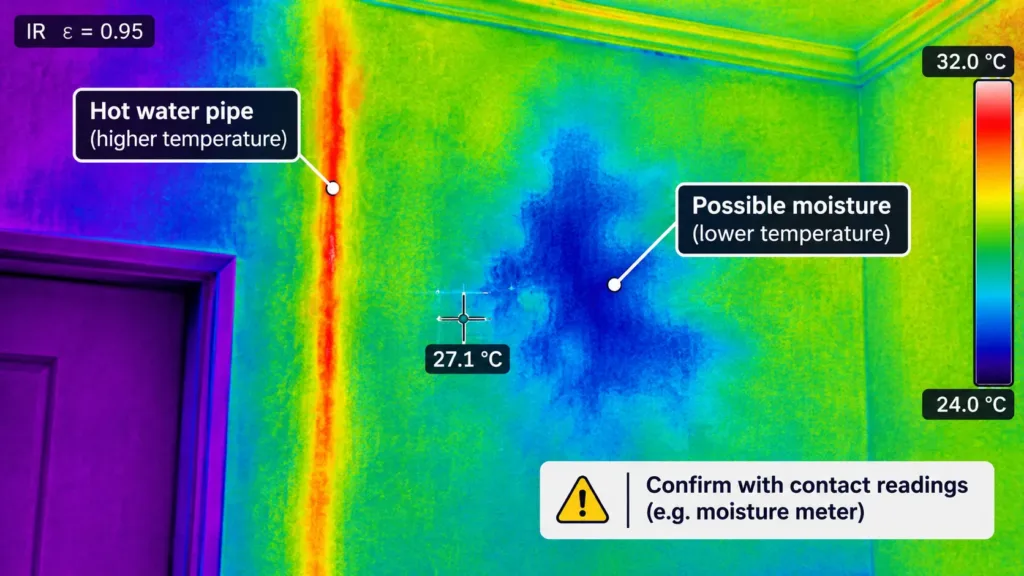
A thermal image is a starting point for diagnosis, not a verdict.
It Reads Temperature, Not Water
A cool patch could be water, but it could also be missing insulation, a cold water pipe, a denser material such as a concrete beam, or air from a nearby vent. Thermal imaging leak detection identifies areas worth checking. On its own, it does not prove that water is present.
Sunlight, Air-Conditioning and Pipes Can Mislead
Singapore’s daytime highs typically sit around 31°C to 33°C, and a west-facing wall that took the afternoon sun can stay warm for hours, masking a damp area or creating a false pattern. Air-conditioning cools some surfaces faster than others, and condensation from aircon pipes in a false ceiling can look like a leak. Concealed water pipes also stand out clearly on a scan, and a competent operator accounts for all of these before drawing conclusions.
Results Depend on the Operator
Two people can look at the same image and read it differently. Singapore’s building rules reflect this. Under the BCA Periodic Facade Inspectionregime, the appointed Competent Person must personally review all inspection images, readings and reports, even when drones or assistants collect the data. In practice, the value of infrared thermography depends on how the operator sets up the camera, times the scan and compares readings.
Combining Visual, Thermal and Moisture Meter Checks
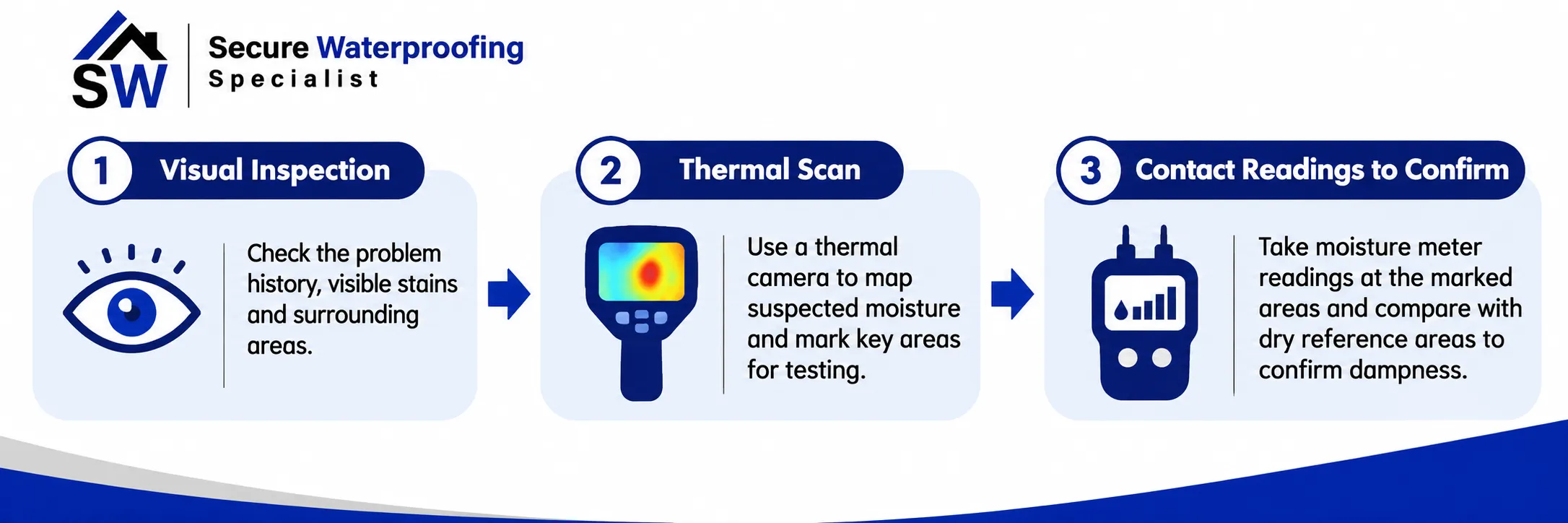
Reliable inspections let each method check the others.
Visual Inspection Sets the Starting Point
The inspector begins with the history of the problem. Where is the stain, when does it appear, and what sits above it? This helps determinewhere the scan should focus.
Thermal Scanning Narrows the Search
The thermal camera then maps temperature patterns across the area to suggest how far suspected moisture extends and where to check next. Suspect zones are marked for closer testing.
Moisture Meter Readings Confirm the Source
The inspector then takes moisture meter readings across the marked zones and compares them with dry reference areas of the same material. Many moisture meters provide comparative readings rather than exact water content, and salts in the material can affect the result, so readings are interpreted alongside the thermal pattern.
Where needed, a water or dye test helps confirm the entry point. At Secure Waterproofing, we use thermal imaging, moisture meters and leak tracing during our water leakage repair inspections before recommending a repair method.
Conclusion
Thermal imaging leak detection gives inspectors a faster, non-invasive way to see where hidden moisture may be sitting behind walls, ceilings and floors. Because it reads temperature rather than water, the results always need context and confirmation.
Paired with a visual inspection and contact readings, a scan helps the repair target the source rather than the stain. For Singapore homeowners, MCSTs and property managers dealing with a leak they cannot trace, a professional assessment is the practical next step.
FAQs
Can thermal imaging detect leaks behind bathroom tiles?
Sometimes. Moisture beneath tiles may create detectable temperature differences, especially around floor traps and wall joints. However, glazed tiles can cause reflections, so further checks are needed.
Can a thermal camera find the source of a ceiling leak?
It can identify suspected damp areas but cannot always pinpoint the source. In HDB flats, upper and lower floor owners generally share responsibility for repairing leaks through the floor slab. Our ceiling leak repair service includes further checks to confirm the cause.
When is the best time to carry out a thermal scan?
Thermal imaging leak detection works best when there is a clear temperature difference between wet and dry areas, and when the surface has not been heated by direct sun. In Singapore, that often means scanning soon after a heavy downpour or after the suspected bathroom is used, avoiding the midday sun.
Can I use a phone thermal camera to find a leak myself?
Yes, a phone thermal scanner can reveal temperature differences, but it may miss subtle moisture patterns. Professional inspection and additional tests are recommended for accurate diagnosis.