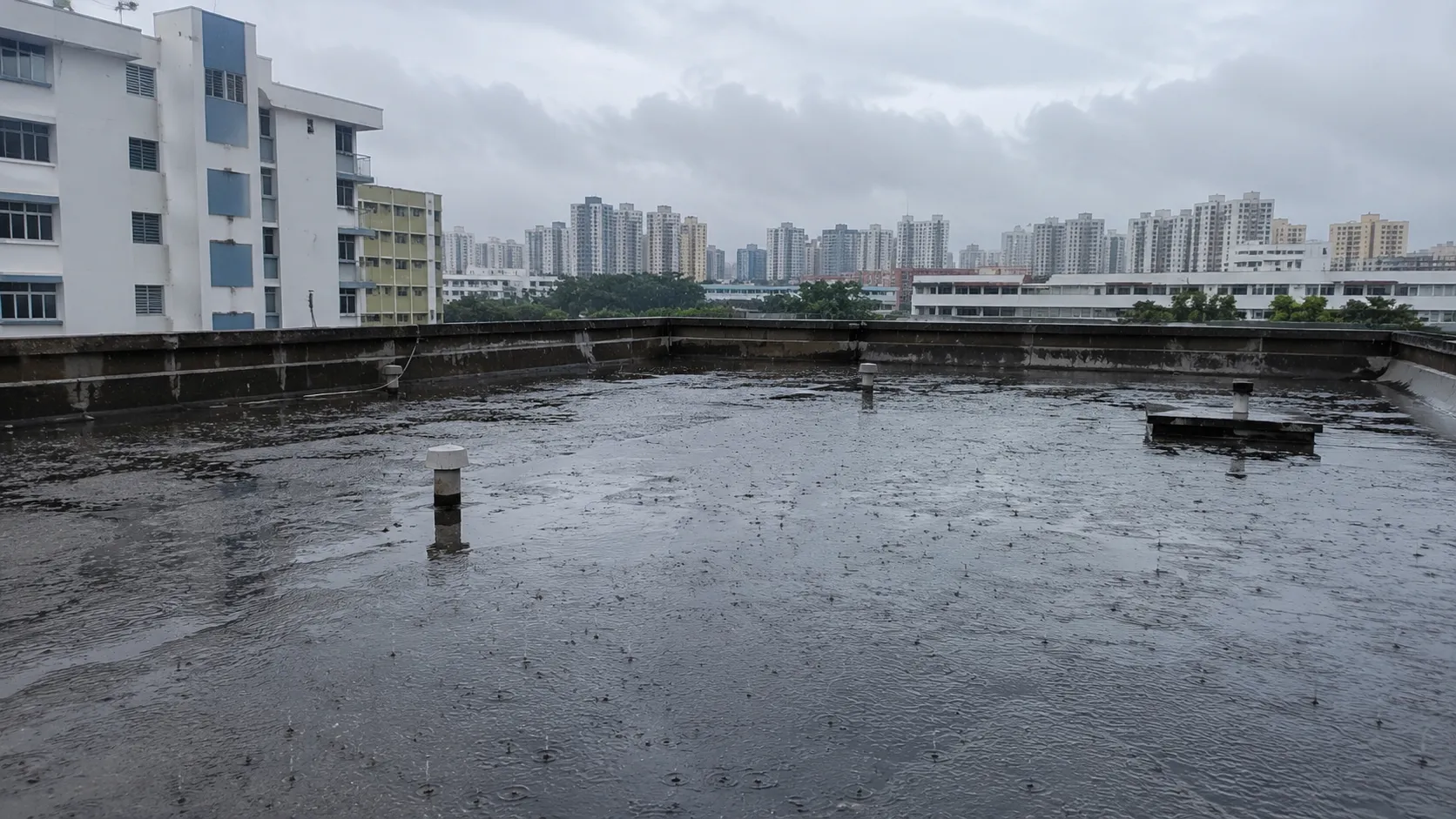
Flat and low-slope roofs are common across Singapore, from HDB blocks and condominiums to warehouses and factory buildings. After a heavy downpour, it is normal for some water to remain on the roof for a short time. The concern starts when that water does not drain away as expected.
Ponding water on roofs is often an early sign that there may be an issue with the roof slope, drainage system, or waterproofing condition. It can be easy to overlook at first, especially when there are no visible leaks indoors. Property managers may spot the problem during routine inspections, while homeowners may only become aware of it after water stains appear on the ceiling.
In this guide, we look at what qualifies as ponding water, why it happens on Singapore roofs, how it can eventually lead to leakage, and when it is worth getting the roof professionally inspected.
What Counts as Ponding Water on Roofs
Ponding water generally refers to water that remains on a roof for more than 48 hours after the rain has stopped. If the water drains away within a few hours, the roof is usually functioning as intended. Standing water on flat roof surfaces that remains for two days or keeps collecting in the same area after each rainfall may point to a drainage or slope problem.
In Singapore, this is worth paying closer attention to because heavy rain is common throughout the year. During wetter periods, roofs may also have less time to dry between downpours. If drainage is already slow or certain areas of the roof sit slightly lower than others, water can collect more frequently and remain there for longer.
This does not necessarily mean the roof is already leaking. However, repeated ponding is a sign that the drainage, roof slope, or surface condition should be checked before the problem becomes more serious.
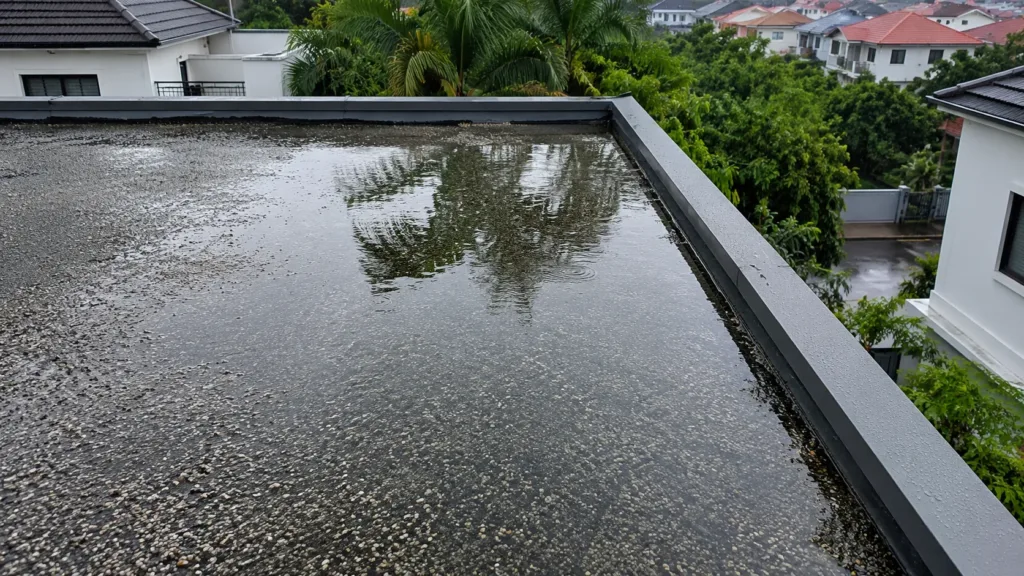
![Rainwater ponding on a flat roof balcony during rainfall, showing standing water across the surface with surrounding parapet walls and an overcast urban background.]](https://securewaterproofing.com.sg/wp-content/uploads/2026/09/water-ponding-flat-roof-balcony-rain-1024x576.webp)
Common Causes of Ponding Water
Ponding water on roofs can happen for several reasons. In some cases, the problem comes from the way the roof was designed or constructed. In others, it develops gradually as the roof ages or when drainage areas are not properly maintained.
Insufficient Roof Slope or Deck Deflection
A flat roof is not completely flat. It should have enough slope to guide rainwater towards the drains and outlets. If the slope is insufficient, water may collect in lower areas instead of draining away.
Changes to the roof deck can also affect drainage over time. Structural deflection or additional rooftop installations may create low points where water repeatedly collects, even when the drains themselves are clear.
Blocked or Undersized Drains and Outlets
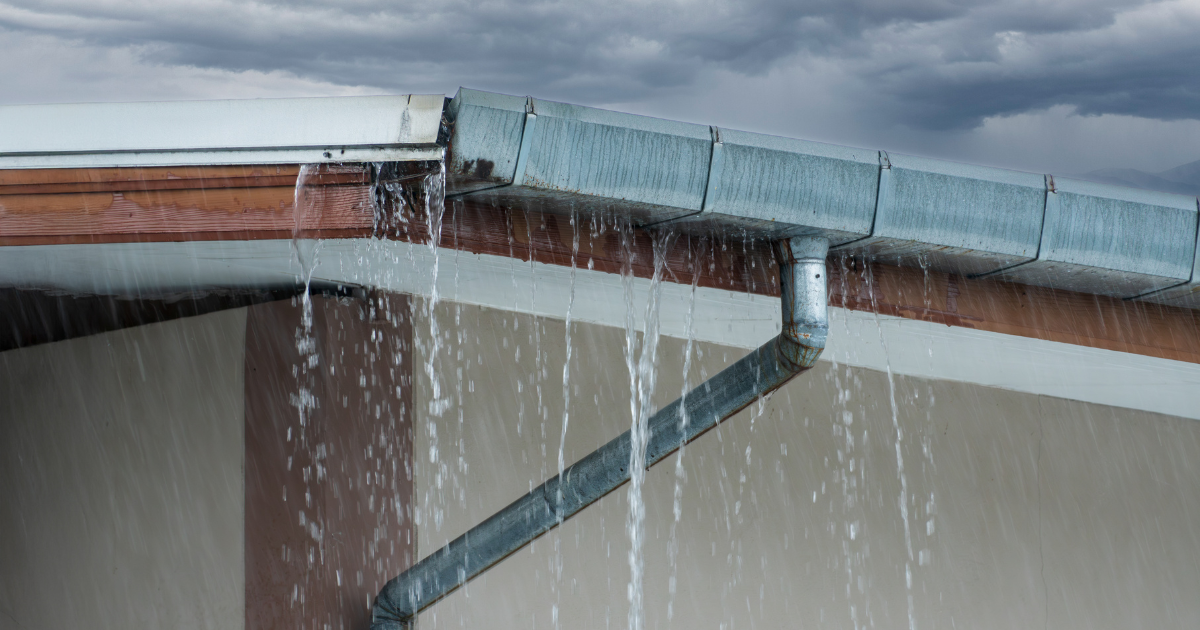
Even with a suitable roof slope, water still needs a clear path to the drainage system. Leaves, dirt, silt and other debris can partially or completely block roof drains and outlets, slowing the flow of water after heavy rain.
Drainage can also become a problem if the existing system is unable to clear rainwater efficiently. When water enters the roof faster than it can drain away, temporary pooling can develop and may remain after the rain has stopped.
Debris Build-Up from Tropical Foliage and Monsoon Runoff
Buildings surrounded by trees may experience regular build-up of leaves, twigs and other organic material on the roof. During heavy rain, this debris can be washed towards drains, outlets and roof valleys.
If these areas are not cleared regularly, the debris can restrict water flow and contribute to roof drainage problems. Routine checks are especially useful after periods of heavy rain or when the property is surrounded by mature vegetation.
Uneven or Sagging Roof Substrate
A roof that drained properly when it was first built can develop low spots over time. Deteriorated screed, compressed insulation, substrate movement or structural deflection can change the level of the roof surface.
These changes may be gradual and difficult to notice until water begins collecting in the same areas after rainfall. If ponding continues even after the drains have been cleared, the condition of the roof surface and its slope may need to be assessed.
How Ponding Water Leads to Roof Leaks
Ponding water on roofs doesn’t sit harmlessly until it evaporates. A roof membrane is designed to shed
water quickly, not hold it, and standing water keeps it saturated for extended periods. In Singapore’s climate that saturation alternates with intense heat once the sun returns, putting the membrane through repeated cycles of expansion and contraction. Over time this accelerates cracking, blistering, and seam separation far faster than normal rainfall exposure would.
Hydrostatic pressure from the sitting water also pushes moisture into any weak point it can find pinholes, ageing seams, flashing around penetrations, or the joints where the roof meets a parapet wall or upstand. On older membranes, prolonged contact with standing water also encourages the kind of surface degradation, chalking, and granule loss that thins the membrane’s protective layer well before its expected service life is up. Leaks frequently show up some distance from the actual pond, since water travels laterally under the membrane or through the substrate before finding its way inside. This is why chasing a ceiling stain back to its source often leads to a pool of water metres away, not directly overhead.
Wider Risks Beyond the Leak Itself
The leak is usually what gets noticed first, but ponding water creates problems that extend past the roof membrane.
Structural Load on Ageing Roofs
Water adds weight to a roof, particularly when it collects across a large area or reaches greater depths. Most roofs are designed to accommodate rain loads, but persistent ponding can become more concerning where the roof structure is already experiencing deflection.
In some situations, this can create a cycle. As the roof deflects, the lower area can hold more water, which adds further load to the structure. This does not mean every area of ponding is a structural problem, but widespread or unusually deep pooling should not be ignored.
Mould and Interior Damage
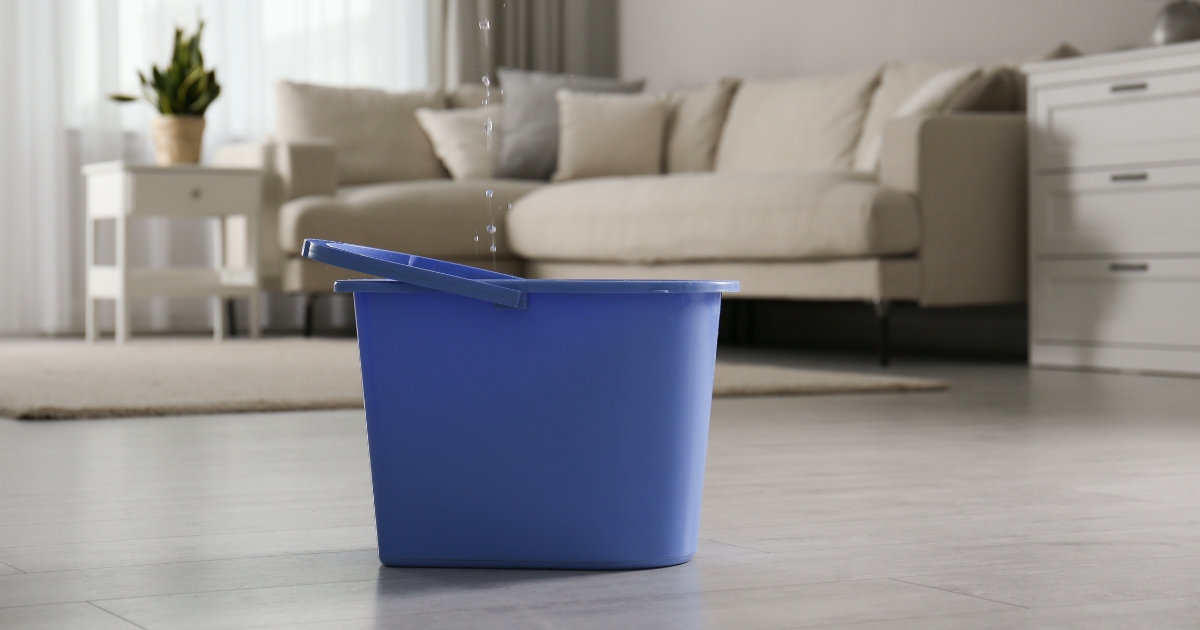
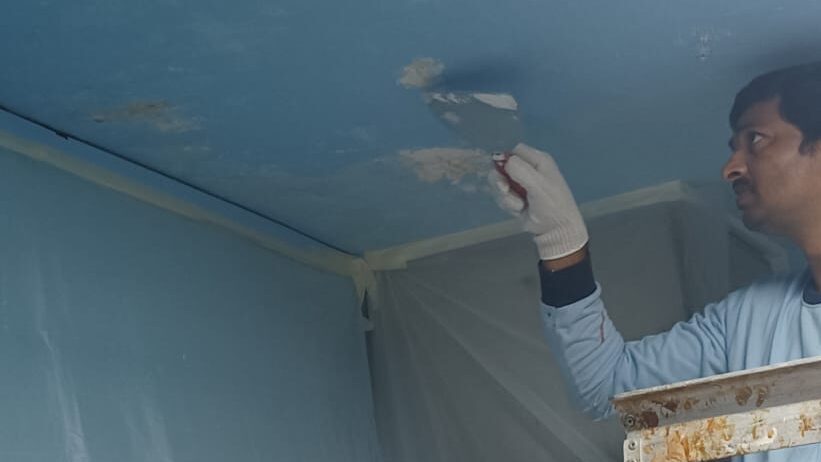
If water eventually passes through the waterproofing system, the damage may extend beyond the visible ceiling stain. Moisture can reach ceiling finishes, insulation and other building materials, potentially causing staining, peeling paint and deterioration.
When these materials remain damp, they can also create suitable conditions for mould growth. This is why it is worth investigating recurring water stains or damp areas rather than simply repainting the affected surface. The visible damage may not show the full extent of the moisture problem behind it.
Mosquito Breeding Risk (NEA stagnant-water guidance)
Stagnant water can also provide a potential breeding environment for mosquitoes. In Singapore, NEA regularly advises property owners and occupiers to remove stagnant water and keep drainage areas clear as part of dengue prevention.
Roof gutters and drains are among the areas NEA recommends checking because leaves, silt and other debris can obstruct water flow and allow water to collect. If water is repeatedly remaining on a roof, addressing the drainage problem therefore helps with more than just protecting the waterproofing system. It also reduces another possible source of stagnant water around the property.
Signs Your Roof Has a Ponding Problem
Standing water on flat roof surfaces may not always be visible from ground level. However, there are several signs that can suggest water is not draining properly:
- Visible pooling that remains more than 48 hours after the rain has stopped
- Discoloured, stained or algae-covered areas where water regularly collects
- Areas of the roof surface that appear uneven, sunken or deteriorated
- Ceiling stains, bubbling paint or water marks on the top floor
- Persistent damp or musty smells in areas below the roof
- Cracking, blistering or other visible deterioration of the waterproofing membrane
Any one of these signs does not necessarily confirm a ponding problem. However, if several appear together, or water repeatedly collects in the same area after heavy rain, it is worth having the roof and drainage system inspected.
When to Call in a Professional Inspection
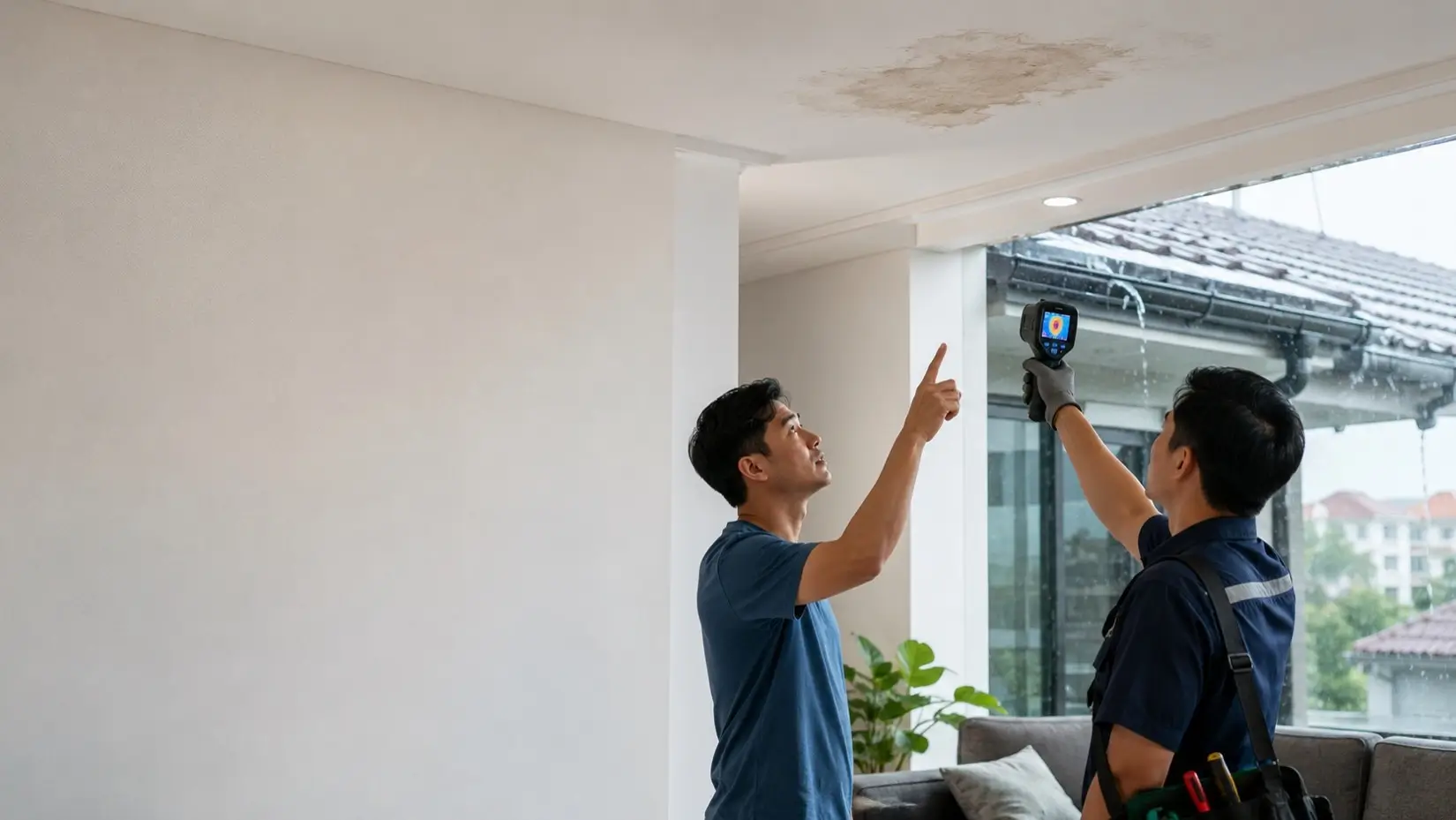
Clearing visible debris from drains is a reasonable first step. However, if water continues to collect in the same area after every rainfall, there may be an issue with the roof slope, drainage system, surface condition, or waterproofing membrane that is not immediately obvious. Persistent ponding, recurring ceiling stains, or visible deterioration of the roof surface are good reasons to have the area professionally inspected.
An inspection can help assess how well the roof is draining, identify possible weak points in the waterproofing system, and determine where water may be entering. This also helps establish whether the problem can be addressed with a localised repair or whether a wider section of the roof needs attention. Secure Waterproofing’s roof waterproofing services include assessing the condition of the roof before recommending a suitable waterproofing solution.
Conclusion
Ponding water should not be ignored, especially when it keeps returning to the same part of the roof. Repeated pooling may indicate an issue with the roof slope, drainage system, or waterproofing condition. For property owners and managers, spotting the problem early gives you a better chance to address the cause before it leads to ceiling stains, mould growth, or more extensive water damage. If the same area continues to hold water after rainfall, it is worth having the roof checked rather than waiting for visible leakage to appear.
FAQs
How long can water sit on a roof before it counts as ponding?
Roofing standards generally use 48 hours as the threshold. Water that clears sooner is normal drainage; water still present after two days points to a slope or drainage issue.
Can ponding water cause leaks even when the roof still looks intact?
Yes. Hydrostatic pressure pushes water into pinholes, ageing seams, and flashing details that aren’t visible from a surface inspection, which is why leaks often appear before any obvious damage is visible on the roof itself.
Does ponding water always mean the whole roof needs replacing?
Not necessarily. Many cases are resolved by adding drainage capacity, correcting a localised low spot, or resurfacing the affected section. A full inspection is what determines whether the fix is targeted or extensive.
What should I do if water keeps pooling in the same spot after every rain?
Clear any visible debris first, but if the pooling returns, treat it as a sign the underlying slope or drainage has a fault. That’s a case for a professional inspection rather than repeated manual clearing.