Key Takeaways
- Monsoon winds change the angle of rainfall, causing roof water ingress by forcing water sideways into joints, flashings, and edges that stay dry in calm weather
- The sheltered side of your roof can leak just as much as the exposed side due to wind turbulence creating low pressure on the downwind face
- Different monsoon seasons hit different parts of your roof
- Ceiling stains and wall dampness from wind-driven ingress often appear far from the actual entry point, making the source harder to trace
- A pre-monsoon inspection of flashings, sealants, and roof penetrations is the most cost-effective way to prevent leaks before they start
Most building owners think about roof leaks as a vertical problem: rain falls straight down, finds a crack, and drips through. That assumption works well enough when the weather is calm, but Singapore’s monsoon seasons are a different situation.
According to the National Environment Agency (NEA), mean wind speeds of 36 km/h or more have been recorded during monsoon surges. Sumatra squalls, fast-moving storm systems that cross Singapore, are capable of producing gusts exceeding 80 km/h. When that happens, the path rainwater takes when it reaches your roof changes too.
Understanding how wind-driven rain in Singapore behaves during monsoon conditions is key to diagnosing unexplained roof water ingress. This is especially true when the leak appears in places that rarely cause problems during ordinary rain.
Why Monsoon Winds Change How Rain Hits Your Roof
Rainwater Does Not Always Fall Straight Down
Singapore has two main monsoon seasons: the Northeast Monsoon from December to early March, and the Southwest Monsoon from June to September. In between, two shorter inter-monsoon periods bring intense, fast-moving thunderstorms.
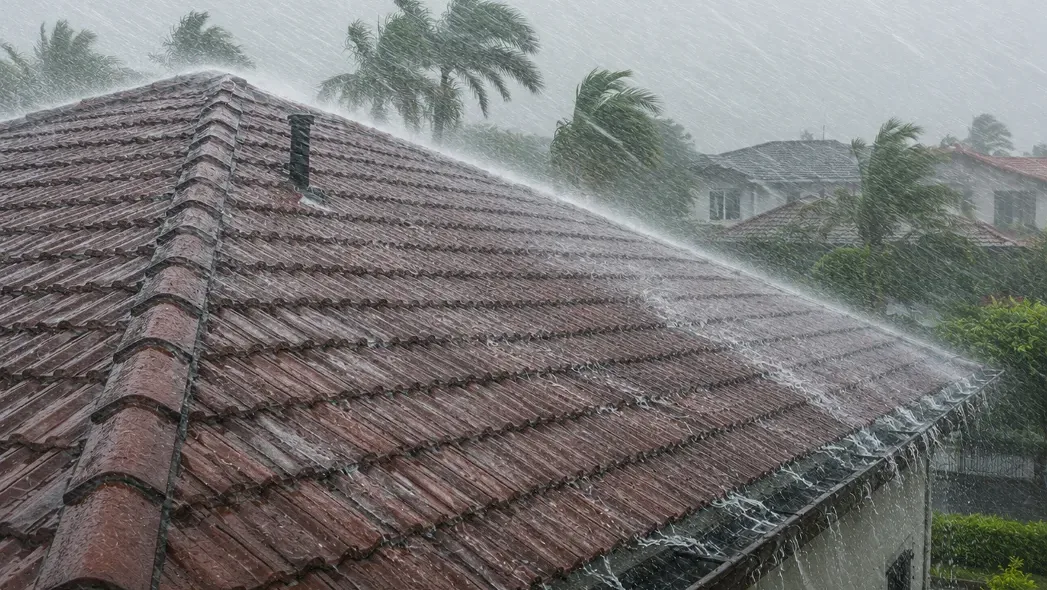
Aside from the volume, what makes monsoon rain different are the speed and angle. The Meteorological Service Singapore (MSS) regularly records sustained wind speeds of 40 to 60 km/h during monsoon surges, with gusts that can exceed 80 km/h. At those speeds, rain no longer falls straight down. It travels at an angle, sometimes close to horizontal, depending on the strength of the gust.
That shift in angle matters. Rain no longer hits only the top of the roof, but it strikes the sides of joints, the faces of parapets, and gaps that would stay dry in calm weather. Once water gets past the outer surface, how it moves beneath roof tiles during a monsoon event can be completely different from what happens after an ordinary shower.
Wind Pressure Can Force Water Into Small Openings
Under normal rainfall, water follows gravity. It pools at low points, runs toward drains, and only gets in where there is a clear gap or crack.
Wind changes that. When rain is driven by monsoon winds, it carries momentum. It can be pushed upward under tile edges, forced sideways into lap joints, and pressed into gaps too small to cause problems when rain is falling vertically. A seal that holds perfectly in calm conditions can let water in during a monsoon event simply because the pressure is coming from a direction it was never designed to handle.
How Wind-Driven Rain Reaches Usually Protected Roof Areas
Water Can Enter Under Roof Overlaps and Tiles
Roof tiles and metal roof sheets are laid with overlaps designed to shed water that falls from above. In calm rain, water runs down and off the surface. During a monsoon, wind can push water horizontally under those overlaps, into the space beneath.
Once water gets under the outer layer, it can travel along the underlayment, battens, or roof deck before appearing as a ceiling stain or wall dampness inside the building. The entry point and the visible leak are often in different locations, which makes tracing the source difficult.
Sheltered Edges Can Become Exposed During Storms
One of the less obvious effects of monsoon wind is what happens on the sheltered side of the roof (the side facing away from the storm).
As wind crosses the roof and passes over a parapet or ridge, it creates a low-pressure zone on the downwind side. Moist air is pulled into that zone and can settle into joints and openings that would normally stay dry. This is why the sheltered side of your roof can develop leaks even when it is facing away from the storm.
When you are trying to work out roof leakage direction, the side of the roof you expect to be the problem is not always where the water is getting in. The sheltered edge deserves as much attention as the exposed one.
Why Different Monsoon Seasons Can Trigger Different Roof Leaks
Changing Wind Direction Exposes Different Weak Points
The Northeast and Southwest monsoons do not blow from the same direction. A parapet wall or flashing that faces north is under the most pressure during the Northeast Monsoon. The same wall is sheltered during the Southwest Monsoon.
This is why some buildings develop a roof leak during monsoon season that only appears at certain times of year. The leak is directional and not random. The same weak point keeps getting hit when the wind comes from a particular angle.
Common Roof Areas Exposed by Sideways Rain
Flashing, Roof Edges, and Wall Junctions
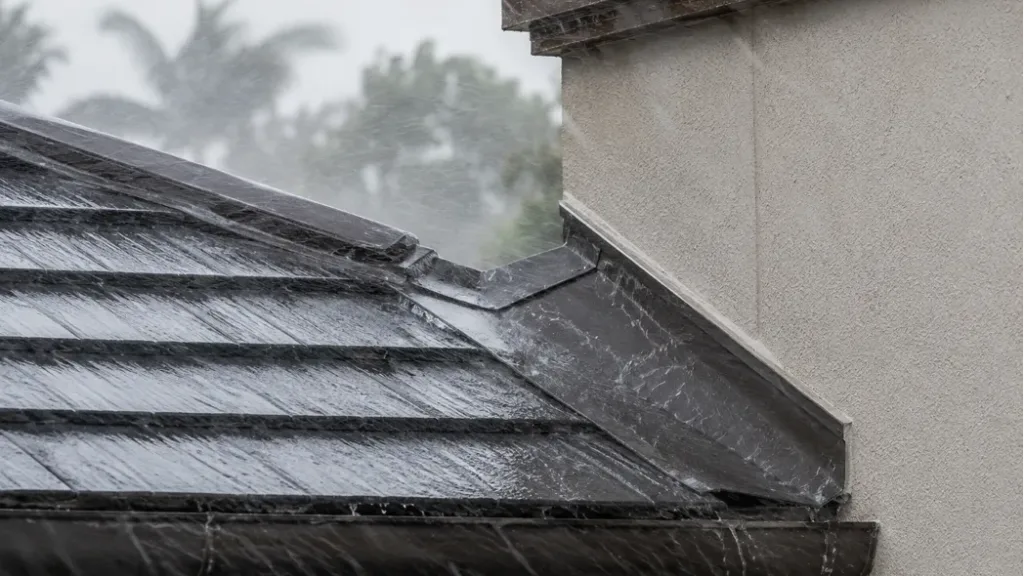
Flashings are the strips of metal or waterproof material used to seal joints, where a roof meets a wall, where a skylight sits, or where two roof planes meet. They are designed to handle water running down from above, not water being pushed sideways.
During a monsoon, wind-driven rain can get behind flashings at parapet walls, force its way into roof-to-wall junctions, and press into any joint where the seal has aged or pulled away. The result is water ingress at wall junctions and roof edges rather than through the main roof surface.
This type of roof water ingress is easy to misdiagnose. It often shows up as damp patches on interior walls near the roofline rather than ceiling drips, which makes it look more like a plumbing issue or condensation problem than a roof leak.
Gutters, Valleys, and Drainage Paths
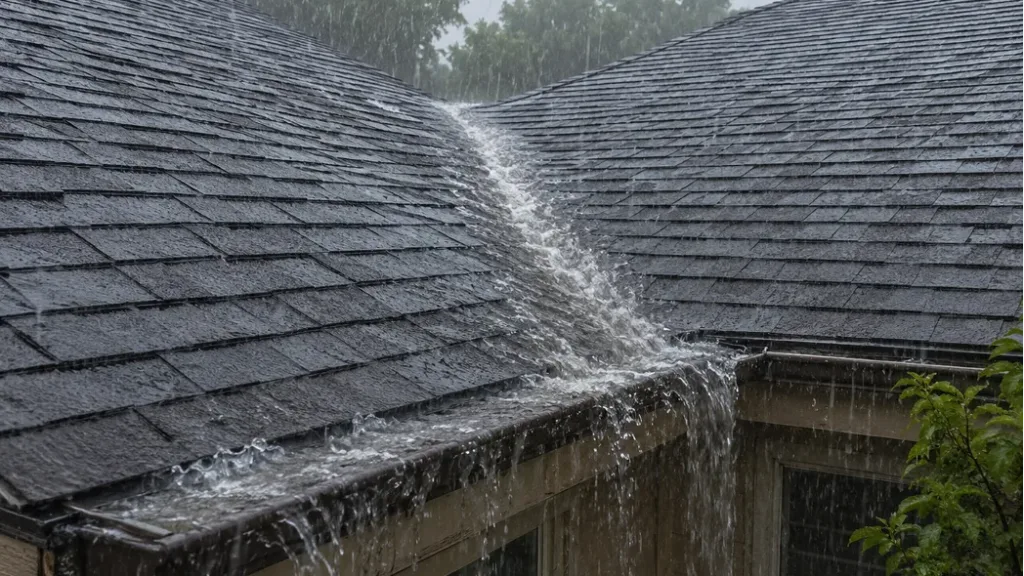
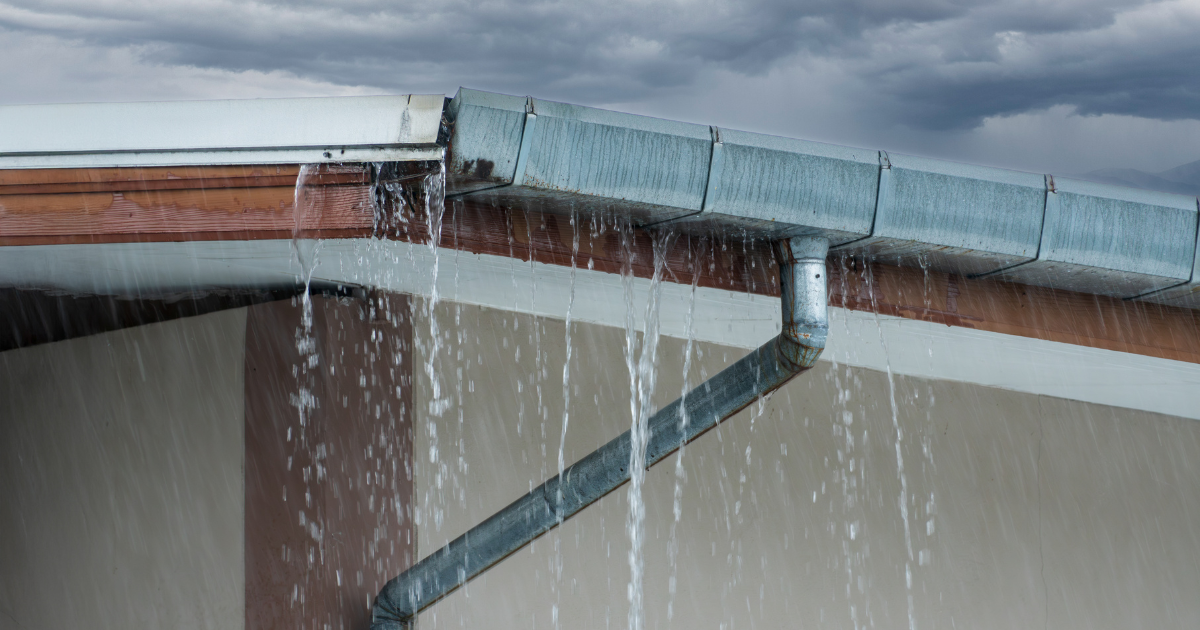
Gutters and roof valleys are designed to collect and channel water away. Under heavy monsoon rain with strong wind, water volumes can exceed what the drainage path is sized for. Wind can also push water backward along a gutter, creating backflow that gets under the roof edge.
Roof valleys (the internal angles where two roof planes meet) are another pressure point. Wind-driven rain can be funneled into these areas with more force than normal rainfall, testing the waterproofing at the valley lining.
Why Wind-Driven Water Ingress Can Be Hard to Trace
Entry Points and Ceiling Stains May Not Align
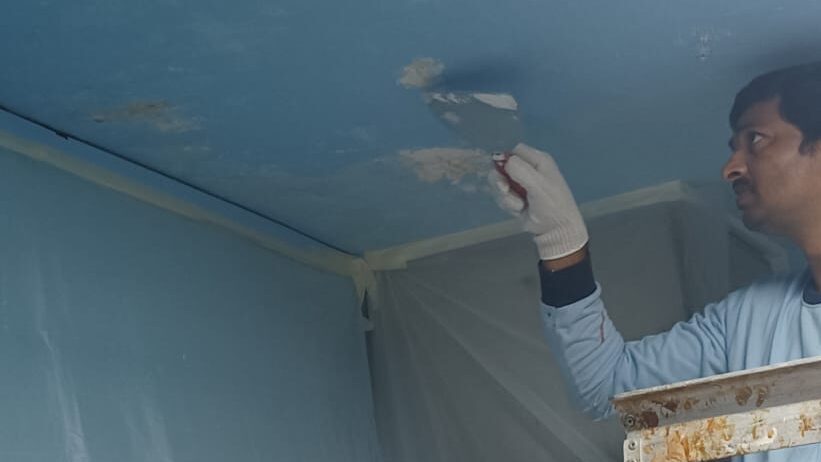
A ceiling stain does not always sit directly below where water got in. Once water enters the roof structure, it can travel along rafters, decking, or the underside of the roof membrane before it finds a point low enough to drip. By the time a stain appears on your ceiling, the water may have travelled a metre or more from where it entered.
This is one reason why pouring water on a suspected area during dry conditions often fails to reproduce a monsoon leak. The entry point may not be where you expect it, and the pressure conditions that pushed water in during the storm are not present.
Hidden Water Paths Can Change With Each Storm
Wind direction varies between storms and between monsoon seasons. This means the roof leakage direction can shift too. A storm from the northeast pushes water into different joints than a storm from the southwest. If the entry point changes each time, the internal water path changes as well.
This is why intermittent leaks that appear in slightly different locations after each storm are often linked to wind direction rather than a single fixed defect. Mapping which storms caused leaks, and noting the wind direction at the time, can help narrow down where to look.
Signs Your Leak May Be Caused by Monsoon Wind Direction
Leaks That Only Happen During Windy Rain
- The leak appears during heavy rain with strong wind but not during still or moderate rainfall
- Water ingress happens on the sheltered or leeward side of the building, not the side facing the storm
- The leak shows up at wall junctions, flashings, or horizontal joints rather than at ceiling low points or across the main roof surface
- Staining on internal walls suggests water is travelling sideways before entering, rather than dripping straight down
- The problem is seasonal (leaks appear consistently during one monsoon season but not the other)
Dampness Near Upper Walls, Edges, or Corners
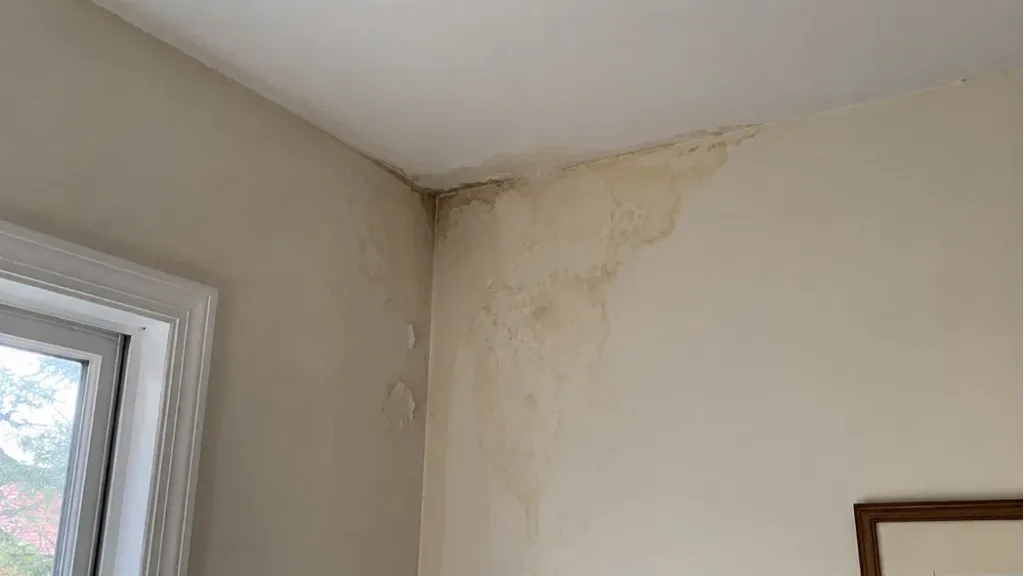
Damp patches near the top of interior walls, at corners, or along wall-ceiling joints are a common indicator of wind-driven ingress rather than a straightforward roof leak. Water pushed in at a parapet or flashing junction tends to track down the wall before becoming visible, rather than appearing as a ceiling drip.
If you are seeing water seepage through roof-adjacent walls and the pattern only appears after windy rain, the flashing detail at that wall junction is a likely starting point for investigation.
How to Protect Your Roof Before Monsoon Rain Hits
Check Flashings, Sealants, and Roof Penetrations
Flashings at parapet walls, roof-to-wall junctions, and ridgelines should be checked for lifted edges, gaps, or sealant that has cracked or pulled away. These joints are the first places monsoon winds force water into. A gap that stays dry in calm weather will not stay dry under monsoon wind pressure.
Skylights, pipe openings, and other roof penetrations should also be resealed if the collar sealant shows any sign of age or shrinkage. These are common entry points for wind-driven rain that are easy to overlook in a standard inspection.
Maintain Drainage and Exposed Roof Edges
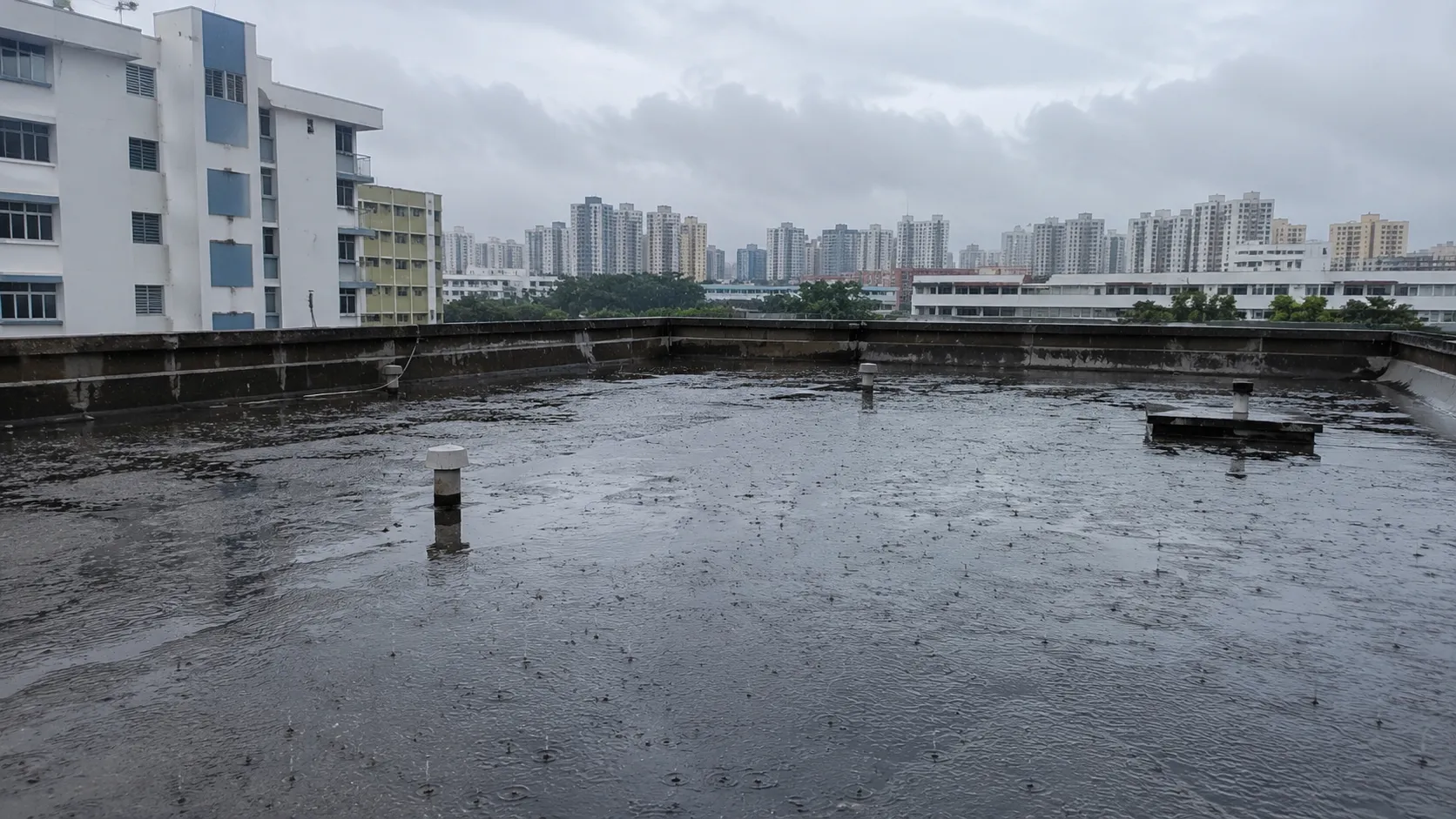
Clear roof drains, gutters, and outlets before each monsoon season. Blocked drainage causes water to pond on the roof surface, which increases the chance of it being pushed into gaps under wind pressure.
Roof edges and parapet walls, particularly on the sides most exposed to prevailing monsoon winds, should be inspected for any membrane lifting or loose capping. These are the areas that take the most direct pressure when wind-driven rain arrives at an angle.
If your roof has been leaking during monsoon season and standard repairs have not solved it, book a free on-site inspection with our team today.
Conclusion
Monsoon winds do not just bring heavier rain; they change the direction it travels and the pressure it puts on your roof. Flashings, parapet walls, ridge joints, and roof penetrations that hold up fine in ordinary rain can all become entry points when monsoon winds drive rain sideways.
Diagnosing these issues means understanding how wind interacts with each part of the roof. Repairs need to handle horizontal water pressure, not just load from above. A proactive inspection before each monsoon season, rather than after a leak has already caused damage, is the most effective way to protect your building.
FAQs
Why does my roof leak only when rain comes from one direction?
Different parts of your roof face different directions. When monsoon winds drive rain from a particular angle, they put pressure on the joints, flashings, and edges on that side. A seal or flashing detail that holds up fine in calm rain may not be able to resist water being pushed sideways into it. The leak stops when the wind drops because the lateral pressure disappears.
Can wind-driven rain make a small roof defect worse over time?
Yes. Each monsoon event that pushes water into a gap, even a small one, can widen it slightly as material softens, sealant ages, or repeated wetting and drying cycles cause expansion and contraction. In Singapore’s climate, the greater risk is that repeated cycles of wetting and drying degrade sealants and adhesive flashings faster than normal rainfall would. A gap that causes a minor drip in year one may become a significant leak by year three.
Is a roof leak during monsoon season always caused by damaged waterproofing?
Not always. Some monsoon roof leaks are caused by design gaps rather than material failure. For example, a flashing that was installed correctly but was never designed to handle lateral wind pressure. Others are caused by drainage systems that are correctly installed but undersized for the volume of water monsoon conditions produce. A thorough inspection should look at both the condition of the materials and the design of the details.
Can wind-driven rain cause wall stains that look like roof leaks?
Yes. Water pushed in at a parapet wall or roof-to-wall junction often tracks down the inside of the wall before appearing as a damp patch or stain. This can look like a plumbing leak, condensation, or a rising damp issue. If the staining only appears after windy rain and is located near the roofline or upper corners of a room, wind-driven ingress at the roof edge is a likely cause. For other reasons why ceiling stains appear without obvious rain, the causes are often just as easy to misread.