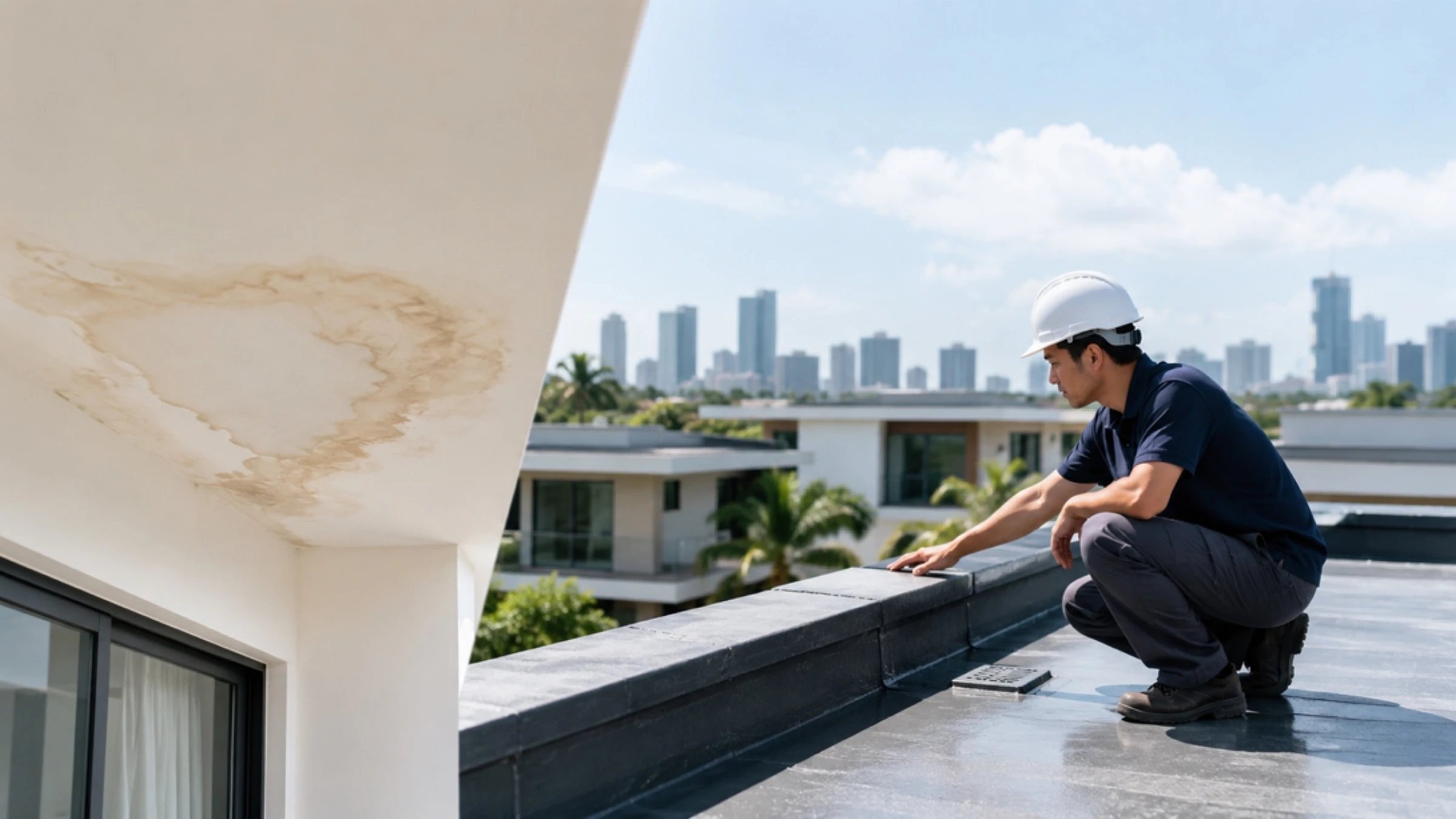
Roof leaks in Singapore can be frustrating, especially when stains, damp patches, or musty smells appear even after days without rain. In many cases, the issue may come from trapped moisture, condensation, poor roof ventilation, thermal movement, or ageing waterproofing rather than an active rain leak. This guide explains the common dry-weather causes of roof leaks and what property owners can do to identify the problem before it leads to more serious damage.
Why Your Roof Leaks When It’s Not Raining in Singapore
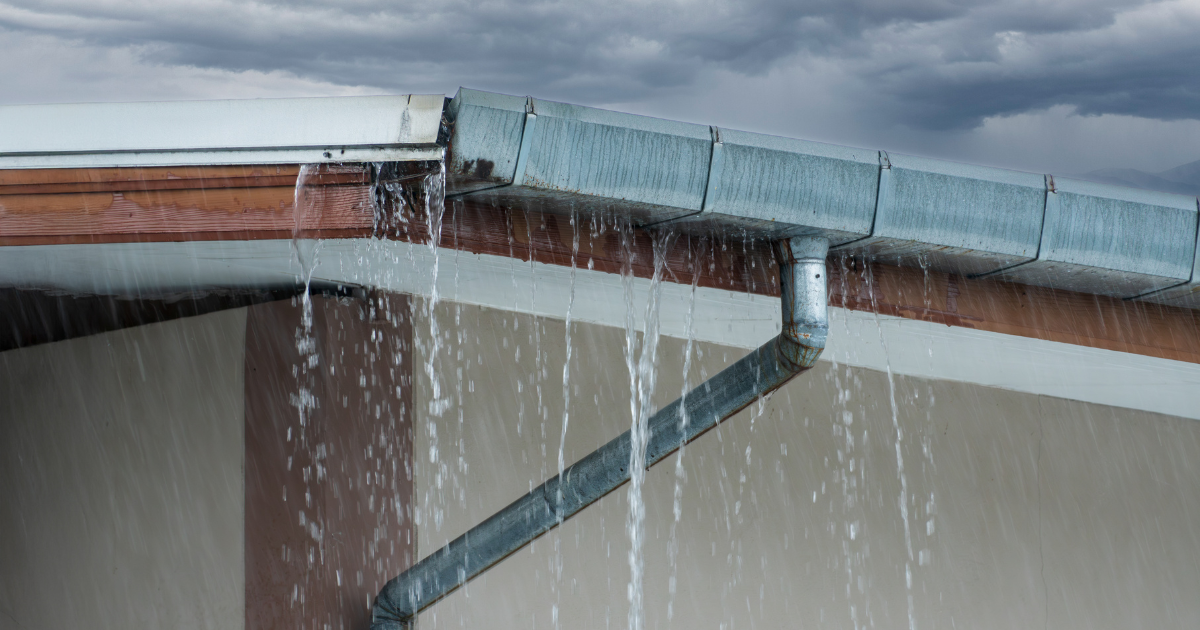
The Difference Between Rain and Non-Rain Leaks
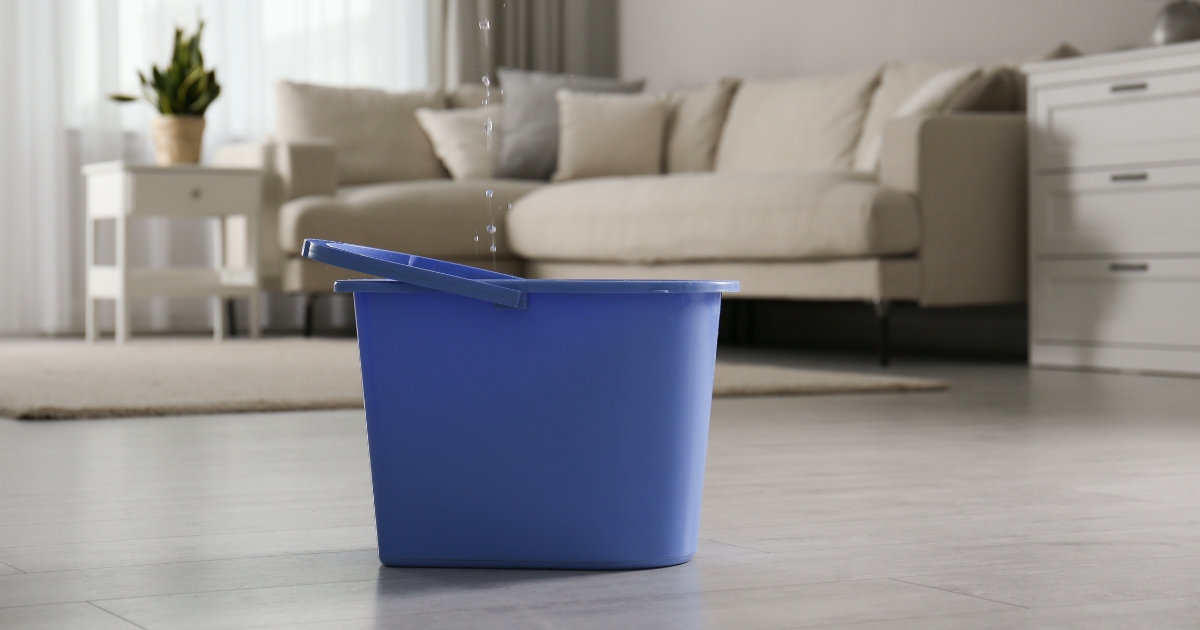
Ceiling stains, damp patches, or musty smells during dry weather can be confusing for property owners. While many people associate roof leaks in Singapore with heavy rain, not every moisture issue comes from external water penetration. Some problems may be linked to condensation, poor ventilation, plumbing issues, air-conditioning drainage, or moisture trapped within the roof system.
Condensation happens when warm, humid air meets a cooler surface and turns into water droplets. This can look like roof leakage even when there is no obvious damage above. Since the signs can overlap, a proper inspection is important before deciding on roof waterproofing or repair work.
Singapore’s Unique Humidity Challenges
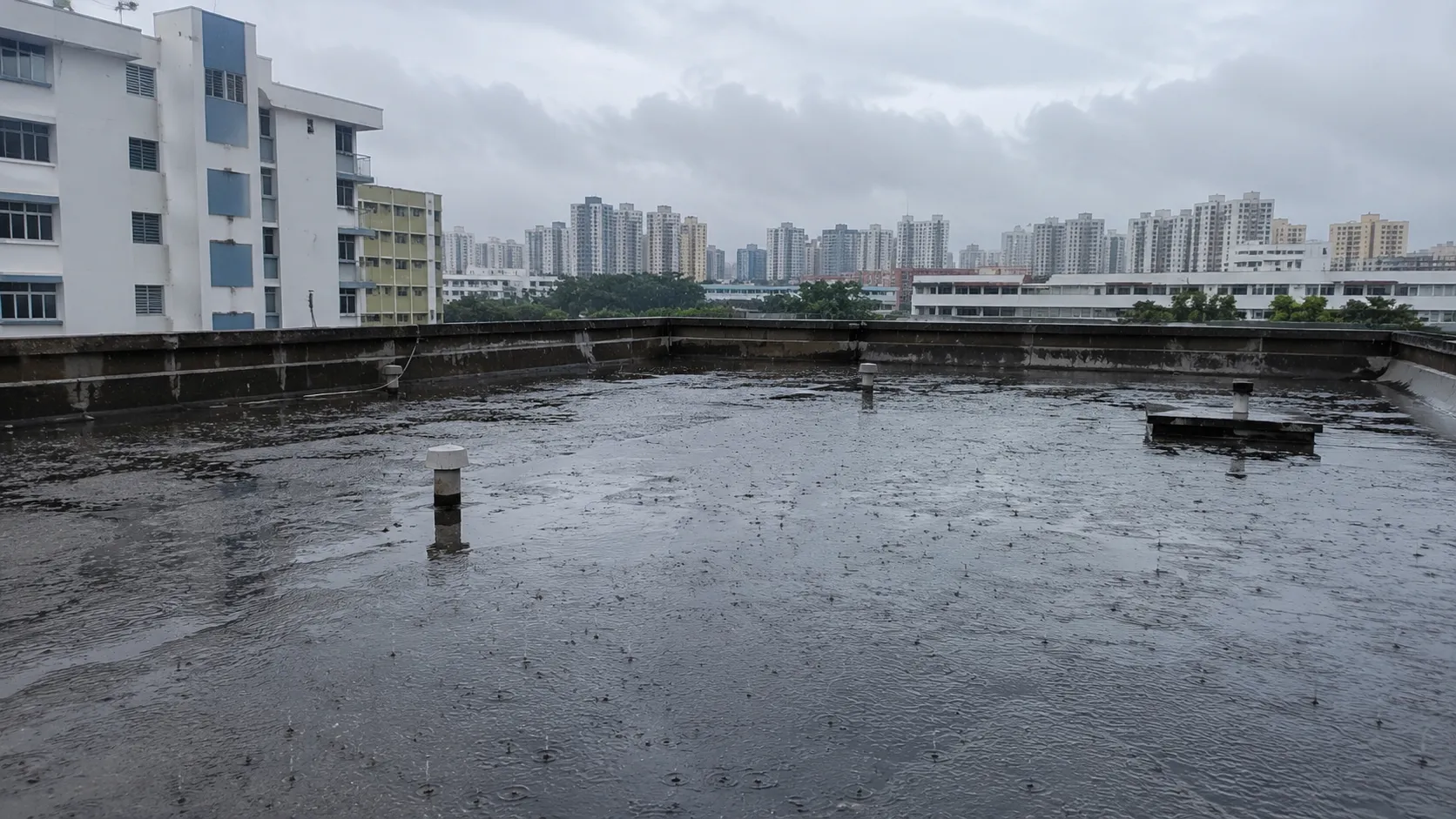
Singapore’s warm, humid climate can make moisture problems harder to spot and manage. Even when there is no rain, high humidity, poor ventilation, and trapped moisture may contribute to roof leakage, damp patches, or musty smells inside a property.
When warm, humid air meets a cooler roof surface, condensation can form and collect in roof spaces. Over time, repeated moisture exposure may affect timber, metal parts, insulation, sealants, and roof waterproofing materials. This does not always mean the roof has failed, but it can point to ventilation issues, ageing materials, or hidden moisture buildup that should be inspected before the problem worsens.
Common Misconceptions About Roof Leakage
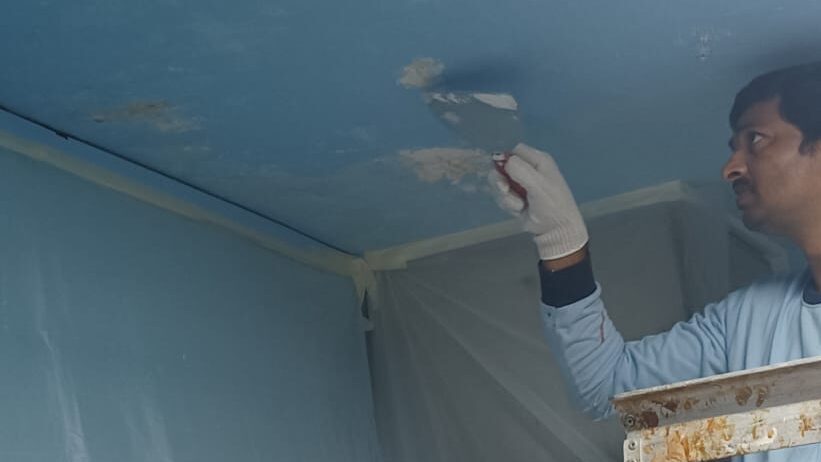
Many property owners only act when roof leakage becomes visible, but a roof can have hidden issues long before stains appear indoors. Water may enter through damaged flashing, worn sealants, cracked tiles, ageing membranes, or weak joints, then travel along beams or internal surfaces before showing up on a ceiling or wall.
Another common mistake is relying on temporary DIY fixes. While small surface repairs may seem simple, the visible damp patch is not always where the leak started. Without proper inspection, hidden moisture can remain in insulation, timber, concrete, or inner walls, leading to recurring problems.
It is also important not to assume that a roof warranty covers every type of leak. Coverage depends on the product, installer, workmanship terms, exclusions, and maintenance requirements. If roof leaks in Singapore keep returning, a qualified roof repair specialist should inspect the full roofing and roof waterproofing system before repairs are carried out.
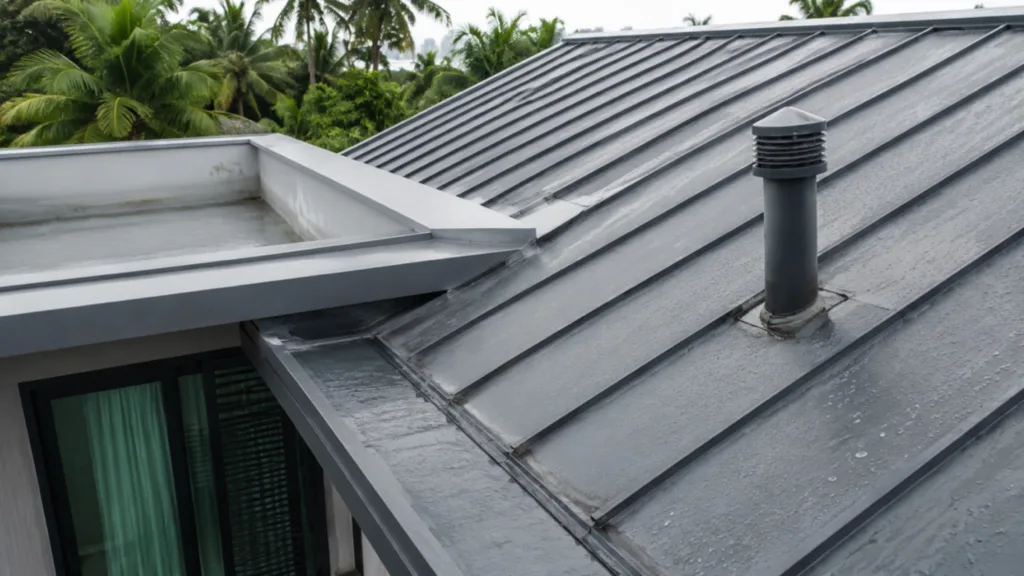
Primary Non-Rain Roof Leakage Causes
Condensation from High Humidity: Warm, humid air can turn into water droplets when it meets cooler roof surfaces, especially in poorly ventilated spaces. Over time, trapped moisture may affect insulation, timber, metal components, and roof waterproofing materials.
Thermal Stress and Material Expansion: Metal roofing expands and contracts with temperature changes. If the roof system is not properly designed or installed, this movement can stress fasteners, seams, and joints, which may worsen roof leakage over time.
Poor Roof Ventilation: Poor ventilation can trap warm, humid air inside roof spaces and increase the risk of condensation. Blocked vents or exhaust fans releasing moist air into roof areas can also contribute to dampness.
Degraded Waterproofing from Heat Exposure: Singapore’s heat, UV exposure, and humidity may gradually affect roof waterproofing systems. Ageing membranes, sealants, or joints can lose flexibility, crack, or weaken, allowing moisture problems to return.
Internal Moisture Migration: Moisture can move through roof layers before appearing indoors. As a result, a ceiling stain may not always be directly below the source of the roof leakage.
Capillary Action Through Roof Materials: Water can travel through narrow gaps, joints, or overlaps by capillary action. This may lead to hidden dampness, rust, or ceiling stains, even when exterior damage is not obvious.
Roof Waterproofing and Repair Solutions for Non-Rain Leaks
Non-rain roof leaks may be caused by condensation, poor ventilation, ageing waterproofing, thermal movement, or trapped moisture. Because the causes can overlap, repairs should start with a proper roof inspection.
Where roof waterproofing has deteriorated, suitable membrane systems such as polyurethane, liquid-applied membranes, or EPDM may help protect vulnerable areas around joints, seams, and penetrations. If condensation is part of the issue, improving roof ventilation and insulation can help reduce trapped humidity and temperature differences.
The best solution depends on the roof type, substrate condition, drainage, and installation quality. This helps ensure roof leaks in Singapore are treated at the source, not just covered with temporary fixes.
How Secure Waterproofing can help
At Secure Waterproofing, we help property owners find the real cause of roof leakage before recommending a repair. Our team checks the roof condition, roof waterproofing system, drainage points, ventilation, and visible moisture signs to understand whether the issue is caused by rainwater entry, condensation, ageing materials, or hidden defects. Whether you need targeted roof leak repair or a more complete roof waterproofing solution, we provide practical recommendations based on your property’s condition, so the problem can be properly addressed instead of temporarily patched.
Conclusion
Roof leakage during dry weather can be confusing, especially when there has been no recent rainfall. In Singapore’s humid climate, issues such as condensation, thermal stress, poor ventilation, trapped moisture, and ageing waterproofing may all contribute to damp patches or ceiling stains.
Because the visible stain is not always directly below the source of the problem, property owners should avoid relying on guesswork or temporary patching. A proper roof inspection can help identify the cause early and guide the right repair approach, whether the issue requires improved ventilation, targeted leak repair, or a more complete roof waterproofing solution.
FAQs
Why does my roof leak even when it has not been raining?
Dry-weather roof leakage may be caused by condensation, trapped moisture, poor ventilation, thermal movement, or ageing waterproofing. In Singapore’s humid climate, warm air can also form water droplets when it meets cooler roof surfaces.
How can I tell if it is condensation or actual roof damage?
Condensation-related dampness may appear during dry weather or after temperature changes, while rain leaks usually worsen during or after heavy rain. However, the signs can overlap, so a proper roof inspection is the safest way to confirm the cause.
What happens if I ignore a small roof leak?
A small leak can worsen over time and may affect insulation, timber, metal parts, ceilings, or interior finishes. Early repair is usually easier than waiting until hidden moisture causes more serious damage.
How much does roof leak repair cost in Singapore?
The cost depends on the leak source, roof type, access, damage level, and whether waterproofing or ventilation work is needed. A site inspection is usually required before an accurate quotation can be provided.
Can better roof ventilation prevent leaks during dry weather?
Better ventilation can help reduce condensation-related moisture by allowing warm, humid air to escape. However, if the issue is caused by damaged waterproofing, roof defects, or drainage problems, ventilation alone may not solve it.